Consumer Unit Upgrades
Consumer UnitUpgrades & Replacementin Loughton, Harlow & Epping
A modern, RCBO-protected consumer unit fitted to the 18th Edition of BS 7671, most homes back on full power the same day, with certification issued straight after testing.
NICEIC Approved Contractor · 18th Edition qualified · four-person team · free site visit
22 yrs
On the tools since 2004
18th Ed.
BS 7671 qualified
4-person
Team for larger installs
£5m
Public liability insurance
Overview
Consumer unit replacement and upgrades across Essex and East London
The consumer unit, still often called the fuse box, is the point where the incoming electricity supply is split into individual circuits for lighting, sockets, the cooker, the shower and anything else in the property. Older units, particularly those with a plastic enclosure and rewireable or cartridge fuses instead of circuit breakers, are increasingly flagged during EICRs as needing replacement, both because plastic consumer unit enclosures no longer meet current amendment requirements and because they typically lack the RCD or RCBO protection that modern regulations expect on most circuits.
A replacement consumer unit gives every circuit its own RCBO, a combined device that protects against both overload or short circuit and earth leakage, so a fault on one circuit trips only that circuit rather than plunging the whole property into darkness. We also fit a metal enclosure as standard, in line with Amendment 3 requirements, and can include a surge protection device (SPD) where the property has sensitive electronics, home automation, or a history of nuisance trips from supply-side voltage spikes.
Work is usually completed in a single day for a standard domestic property, and we issue an Electrical Installation Certificate on completion, confirming the new board and circuits have been tested and comply with BS 7671. For larger domestic properties, HMOs, or commercial premises with three-phase distribution boards, our four-person team can plan the work in stages so essential circuits stay live for as much of the day as possible.
Homes with an old fuse box
Rewireable fuses, a plastic consumer unit, or a board with no RCD protection are common EICR findings. Replacing the unit resolves the underlying issue rather than just noting it for next time.
Landlords acting on an EICR
When a periodic inspection flags the consumer unit as a C2 item, we can quote the replacement at the same visit and carry it out promptly to keep the tenancy compliant.
Homes adding an EV charger or home automation
New high-demand or sensitive circuits often need additional capacity or surge protection that an older board simply was not designed to provide.
Commercial premises upgrading distribution
Three-phase boards, sub-mains and dedicated circuits for equipment, carried out under RAMS and scheduled to minimise disruption to trading hours.
Leave it, and it gets worse
What happens if an outdated consumer unit is left in place
Consumer units do not fail dramatically on a fixed schedule, which is exactly why so many are left in place well past the point they should have been replaced. Around 60 words on the pattern before four specific consequences.
No RCD protection on final circuits
Older boards frequently protect only some circuits, or none, with an RCD. Without this, a fault to earth through a person or a damaged cable will not be disconnected quickly enough to prevent serious electric shock, which is precisely what RCD protection is designed to stop.
Plastic enclosures and fire risk
Amendment 3 to BS 7671 requires consumer units to be non-combustible, following a number of documented fires linked to arcing inside plastic enclosures. An older plastic unit is not automatically dangerous, but it no longer meets the standard expected of a current installation.
Nuisance and unexplained trips
Shared or degraded RCD protection across multiple circuits means one fault, such as a damp outdoor light fitting, can repeatedly trip circuits that have nothing to do with the actual problem, making faults harder to diagnose and more disruptive to live with.
Capacity limits on new circuits
Adding an EV charger, an electric shower or a home automation system to an older board can mean there is no spare capacity, forcing either a partial upgrade under pressure or a second visit shortly after the original one.
Our process
The same five steps on every job
- Step 01
Site visit and load assessment
We look at the existing board, count circuits, check the supply capacity and discuss any planned additions such as an EV charger or extension, so the new unit is sized correctly rather than just like-for-like.
- Step 02
Quotation
You receive an itemised quote covering the consumer unit, RCBOs, any SPD, labour and certification, usually within a day of the visit for a standard domestic job, or about a week for larger commercial projects.
- Step 03
Isolation and safe removal
On the day, we isolate the supply, disconnect and remove the old unit, and inspect the meter tails and earthing arrangement, upgrading these if they do not meet current requirements before the new board goes in.
- Step 04
Installation and circuit reconnection
The new consumer unit is fitted, each circuit is reconnected to its own RCBO, and labelling is updated so every circuit is clearly identified for future testing or fault-finding.
- Step 05
Testing and certification
Every circuit is tested for insulation resistance, earth fault loop impedance and correct RCBO operation before the supply is restored. An Electrical Installation Certificate is issued confirming compliance with BS 7671.
What you get
Specific outcomes, not promises
Same-day turnaround
Most domestic consumer unit replacements are completed in a single visit, with the property back on full power by the end of the day and certification following shortly after testing.
Per-circuit RCBO protection
A fault on one circuit trips only that circuit, so a faulty outdoor light does not take down the kitchen sockets or the boiler along with it.
Amendment 3 compliant enclosure
Metal consumer units fitted as standard, removing the fire risk associated with older plastic enclosures highlighted in current BS 7671 guidance.
Room for future additions
Boards are sized with spare ways and capacity in mind, so adding an EV charger or extra circuit later does not immediately require another board change.
Optional surge protection
An SPD can be fitted to guard sensitive electronics, home automation equipment and appliances against voltage spikes from the incoming supply.
Certified and traceable
An Electrical Installation Certificate is issued on completion, giving you a dated record for insurance, resale or a future EICR to reference.
In detail
What actually changes when a consumer unit is replaced
A consumer unit upgrade is more than swapping one box for another. Enclosure material, protective device selection, earthing arrangements and how work is sequenced all affect safety, downtime and how the finished installation performs day to day.
RCBOs versus split-load RCD boards
Many boards fitted in the last fifteen to twenty years use a split-load layout, with two RCDs each covering half the circuits. This is better than no RCD protection at all, but it still means a fault on one circuit can trip every other circuit sharing that RCD, including the fridge freezer or a home working setup. We fit individual RCBOs per circuit as standard, which isolate only the faulty circuit and make fault-finding far quicker because you know immediately which circuit tripped.
RCBOs cost more per way than a shared RCD arrangement, but the difference is modest against the overall job and is generally considered current best practice, particularly for landlords who cannot always get quick access to reset a board remotely, and for households running sensitive equipment that should not lose power unnecessarily.
Surge protection devices (SPDs)
BS 7671 Amendment 2 introduced a requirement to assess the need for surge protection on new and altered installations, considering factors such as the consequence of a transient overvoltage, whether the property has extensive electronic equipment, and the level of lightning exposure in the area. An SPD, typically Type 2, is fitted within or alongside the consumer unit and diverts voltage spikes to earth before they reach sensitive circuits.
For homes with home automation systems, networked equipment, EV charging or significant investment in appliances, we generally recommend fitting an SPD at the same time as a consumer unit upgrade, since retrofitting one later means opening the board again for a comparatively small piece of additional work.
Meter tails, earthing and bonding checks
A consumer unit does not operate in isolation, so as part of every replacement we check the meter tails for correct sizing against the supply fuse rating, and confirm the earthing arrangement, whether TN-C-S, TN-S or TT, is suitable for RCD and RCBO protection to function correctly. Main protective bonding to gas, water and any other extraneous conductive parts is also checked and upgraded where it does not meet current cross-sectional area requirements.
Skipping these checks is one of the more common shortcuts in cut-price consumer unit swaps: a new board full of RCBOs will not protect anyone properly if the earthing behind it is inadequate, which is why our test results and certificate cover the whole installation, not just the new enclosure.
Domestic single-phase versus commercial three-phase boards
A domestic consumer unit upgrade typically involves a single incoming supply, a manageable number of ways, and a few hours without power while the changeover happens. Commercial and larger residential properties often run a three-phase supply feeding a distribution board with sub-mains to smaller boards elsewhere in the building, meaning load balancing across phases and coordination with other trades or opening hours becomes part of the planning.
For commercial work we issue RAMS in advance and, where a site cannot tolerate a full power-down, plan the changeover in stages or schedule it outside trading hours, using our four-person team to keep the total downtime to a minimum.
Questions
Consumer Unit Upgrades, your questions answered
Anything not covered here, call 020 4620 2290. Lines are answered 24 hours and site visits run Monday to Friday 7am–6pm and Saturday 8am–5pm.
How much does a consumer unit replacement cost?
Cost depends on the number of circuits, whether an SPD is included, and any earthing or bonding upgrades needed. We do not publish a fixed price; a free site visit lets us quote accurately, usually within a day for domestic jobs.
How long will my power be off?
Most domestic replacements take a single working day, with the supply isolated for the core changeover period and restored the same afternoon once testing is complete.
Will I get a certificate afterwards?
Yes. Every consumer unit replacement is tested and an Electrical Installation Certificate is issued confirming the new installation complies with the 18th Edition of BS 7671.
Do I need a metal consumer unit by law?
Amendment 3 to BS 7671 requires new consumer units to be non-combustible. If your board is being replaced, it should be fitted in a metal enclosure to meet current standards.
Can you add an SPD at the same time?
Yes, a surge protection device can be fitted within the new consumer unit during the same visit, which is more efficient than adding one to an existing board later.
Is a consumer unit upgrade linked to my EICR?
Often, yes. An outdated or plastic consumer unit is a common C2 finding on an EICR, and we can quote the replacement at the same visit as the inspection to keep the process straightforward.
Do you work in Harlow and Epping as well as Loughton?
Yes, alongside Loughton we cover Harlow, Epping, Chigwell, Buckhurst Hill, Woodford Green, Waltham Abbey, Chingford, Walthamstow, Ilford, Romford and Brentwood.
Can you fit a new board before an EV charger install?
Yes, we frequently upgrade the consumer unit and check supply capacity as part of preparing a property for an EV charger, sizing the new board to accommodate the charger circuit properly.
Related services
Often booked alongside this
EV Charger Installation
OZEV-approved installs and an accredited Rolec installer, so you keep access to the chargepoint grant where you qualify.
EICR & Landlord Certificates
Electrical Installation Condition Reports and Landlord Electrical Safety Certificates, carried out by a City & Guilds 2391 tester.
Fault Finding & Diagnostics
Methodical testing to trace tripping circuits and intermittent faults to their source, rather than replacing parts on guesswork.
Where we work
Consumer Unit Upgrades across Essex and East London
Working out of Chester Cl in Loughton, the team covers the following towns daily. See the areas we cover or get in touch to check your postcode.
- Loughton
- Harlow
- Epping
- Chigwell
- Buckhurst Hill
- Woodford Green
- Waltham Abbey
- Chingford
- Walthamstow
- Ilford
- Romford
- Brentwood
Recent work
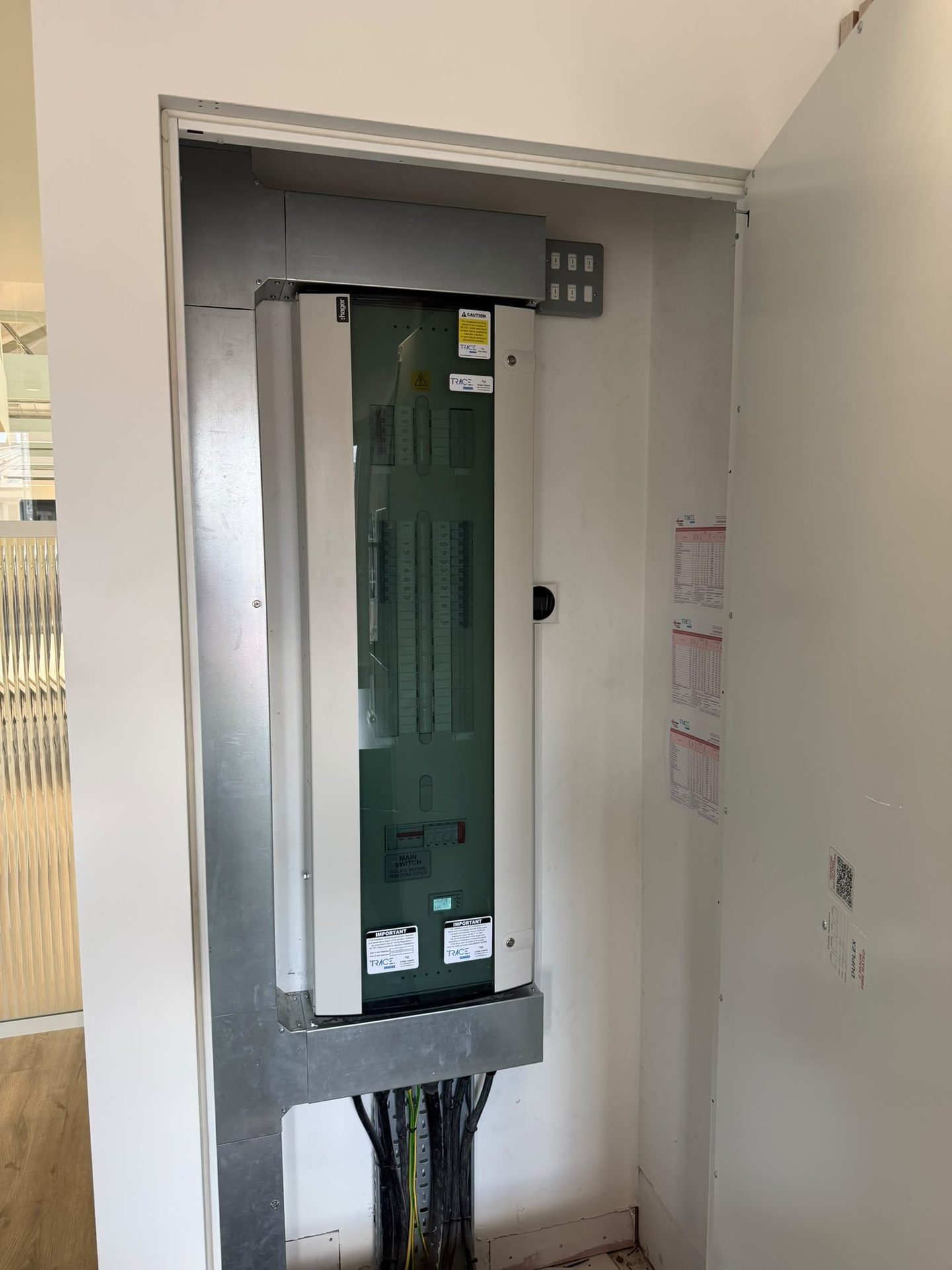
Consumer Unit Upgrades we have completed
Next step
Upgrade your consumer unit with certified testing included
Arrange a free site visit and we will assess your existing board, quote the replacement clearly, and issue certification as soon as testing is complete.
Lines answered 24 hours · Mon–Fri 7am–6pm, Sat 8am–5pm on site